
 Sell Your Tractor

Best Used Car, Services, Auto Parts, Rent Car Available for Buy and Sell Near By Go Ahead
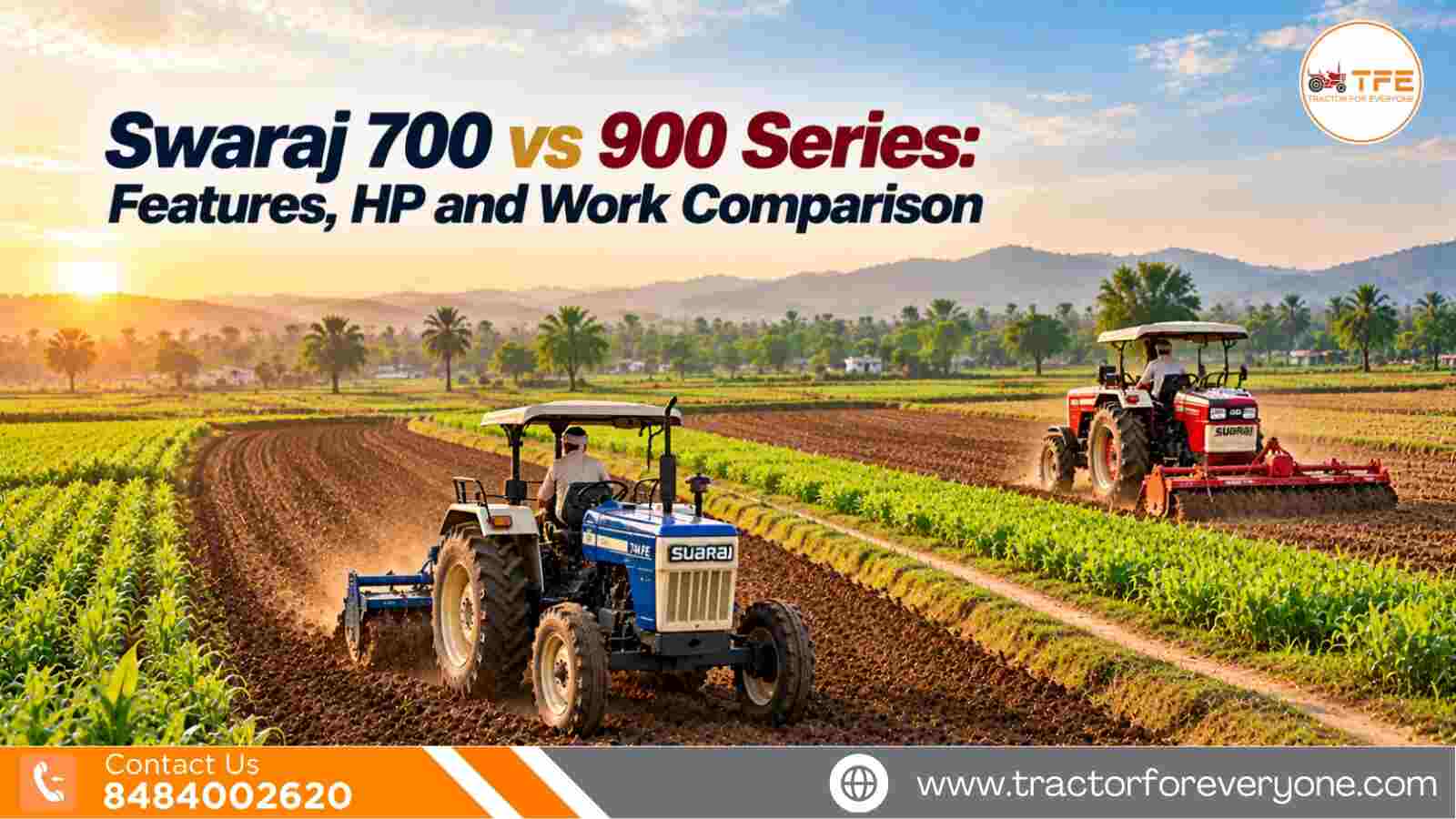
Choosing between Swaraj 700 Series and 900 Series tractors requires careful evaluation of the exact model, engine power, transmission, fuel consumption and farming requirements. The right tractor is the one that matches your land, soil conditions, implements and workload while keeping purchase and maintenance costs manageable.
Swaraj is an established tractor brand in India, known for agricultural tractors designed for different farm operations. For buyers researching the Swaraj 700 vs 900 Series comparison, the first step is to verify the exact model names and specifications available in their region instead of assuming that every model in a series has the same capabilities.
A meaningful Swaraj 700 vs 900 Series comparison must use verified specifications for two specific tractor models. Horsepower, engine capacity, transmission, PTO output, hydraulic lift capacity and tractor weight can vary by model and variant.
| Specification | Why It Matters |
|---|---|
| Engine horsepower (HP) | Indicates the tractor's power category and helps establish implement compatibility |
| Engine displacement | Provides information about engine size, but does not determine performance alone |
| Transmission | Affects gear selection, working speeds and operating convenience |
| PTO power and speed | Determines compatibility with powered agricultural implements |
| Hydraulic lifting capacity | Helps determine whether the tractor can handle suitable mounted equipment |
| Wheelbase and weight | Influence stability, traction and manoeuvrability |
| Fuel consumption | Affects operating expenses and cost per acre |
| Brakes and steering | Influence handling, control and safety |
| Tyre configuration | Affects traction, ground contact and suitability for different field conditions |
The better horsepower category depends on the tractor's intended work, the soil it operates in and the implements it must power. Higher horsepower can help with demanding applications, but it does not automatically make a tractor more economical or suitable for every farm.
A tractor in a lower horsepower category may be appropriate for smaller fields, lighter cultivation, routine spraying and other operations within its rated capacity. It can also be easier to manoeuvre in restricted spaces, depending on the tractor's dimensions.
Evaluate the actual engine output, PTO power and recommended implement sizes before selecting a lower-powered model. Avoid choosing a tractor that operates continuously at the limits of its capacity.
A higher-powered tractor may be more appropriate for demanding tillage, larger implements, heavy soil and certain haulage applications. Its suitability depends on torque delivery, traction, transmission gearing and the implement's power requirements.
Farmers should consider whether the additional capability will be used frequently enough to justify the higher purchase price and possible differences in fuel and maintenance expenses.
Tractor features should be compared model by model rather than inferred from the series number. Engine design, gear options, hydraulic systems, PTO settings and operator features must be checked against the official specifications for each tractor.
The engine supplies power for fieldwork, haulage and PTO-driven equipment. Compare rated horsepower, engine displacement, rated engine speed and the manufacturer's published performance information.
An engine's practical performance also depends on maintenance, load, soil conditions and operator technique. During a test drive, check starting performance, unusual noise, exhaust smoke and signs of oil or coolant leakage.
The transmission determines how engine power is delivered to the wheels and how the tractor operates at different speeds. Gear ratios and available speed options should match the farming operations the owner performs most often.
For example, field preparation and road transport may require different operating speeds. A suitable transmission allows the operator to work efficiently without forcing the engine or implement outside the recommended operating range.
The hydraulic system raises and lowers compatible mounted implements and helps maintain the required working position. Compare rated lifting capacity, hydraulic control options and hitch compatibility.
A higher lifting capacity can be useful for suitable heavy implements, but buyers must also consider weight distribution, tractor stability and the implement manufacturer's requirements.
The power take-off (PTO) transfers rotational power from the tractor engine to compatible equipment. Its rated speed, available power, shaft configuration and driveline compatibility are essential when using rotavators, threshers and other powered implements.
Always verify the exact PTO requirements of the selected implement. Tractor horsepower alone does not establish whether a machine can safely operate every implement of a given width.
The best tractor for farming depends on the tasks it must complete throughout the year. Compare both models against the same operations, soil conditions, implement sizes and working hours to make a fair decision.
For cultivation and tillage, engine power, traction, gear selection and implement compatibility are important. A tractor must have sufficient capacity to pull the selected cultivator or plough under typical field conditions.
Heavy or compacted soil may require greater pulling power than light soil. Check the tractor manufacturer's recommendations and avoid comparing tractors using different implement sizes or working depths.
Rotavator performance depends on PTO power, the implement's working width, soil conditions and the tractor's ability to maintain the recommended operating speed. A wider rotavator can increase coverage per pass but may also require more power.
Compare the manufacturer's recommended horsepower range, PTO specifications and hydraulic requirements before deciding which tractor is more suitable for rotavator work.
For haulage, consider engine performance, transmission, braking, tyre condition and the tractor's permitted towing capacity. The suitability of a tractor for a particular trailer depends on the load, terrain and applicable safety requirements.
Do not assess haulage performance by horsepower alone. Safe braking, stable handling and compliance with the tractor manufacturer's limits are essential.
Seed drills and intercultural equipment require suitable mounting, working speeds and, where applicable, hydraulic or PTO compatibility. A tractor that can manoeuvre comfortably within the available field space may be more practical for certain crop layouts.
The right choice depends on row spacing, field size, soil conditions and the equipment used.
Fuel efficiency depends on engine design, operating load, soil conditions, tractor maintenance, tyre pressure and driving technique. No reliable fuel-consumption figure should be assigned to either series without verified model-specific data and comparable testing conditions.
Use the following method to compare the two tractors fairly:
Operate both tractors on comparable fields and under similar soil conditions.
Use implements with equivalent working widths and operating settings.
Record fuel consumed and the area completed.
Calculate litres per acre or litres per hectare.
Repeat the test to reduce the influence of changing field conditions.
Fuel consumption per acre is often more useful for budgeting than litres per hour because it accounts for the work completed.
Regular servicing, clean air filters, correct tyre pressure and suitable operating speeds can help prevent unnecessary fuel use.
Maintenance expenses depend on the exact model, service schedule, usage, parts prices and local dealer support. A tractor with a higher purchase price may still offer better long-term value if its operating costs and downtime are lower.
Engine oil, filters and routine servicing.
Clutch, transmission and drivetrain wear.
Hydraulic performance and fluid leaks.
Tyres, brakes and steering components.
Electrical systems and battery condition.
Spare-parts availability and local labour charges.
Ask an authorised dealer for the recommended service schedule and estimated costs. For used tractors, inspect the engine, clutch, gearbox, hydraulics and tyres before purchase, and include immediate repairs in the total budget.
A Swaraj tractor can operate agricultural implements only when its power, PTO, hydraulic capacity and hitch configuration match the implement's requirements. Compatibility should be confirmed for the exact tractor and implement models.
Common implements to evaluate include:
Cultivator: For loosening and preparing soil.
Rotavator: For seedbed preparation and soil-residue mixing.
Seed drill: For sowing seeds at the required depth and spacing.
Plough: For soil turning, subject to suitable tractor power and field conditions.
Trailer: For transport within permitted towing and braking limits.
Thresher: For post-harvest processing where PTO and power requirements are met.
Before purchasing an implement, check its recommended horsepower range, weight, PTO requirements and operating limitations. Using an unsuitable implement can reduce performance, increase fuel consumption and put unnecessary stress on tractor components.
Choose the tractor that meets your farm's workload, implement requirements and budget with sufficient operating capacity. Do not select a model solely because its series number is higher.
Use this buying checklist:
Confirm the exact model and variant.
Verify horsepower, PTO power and hydraulic lifting capacity.
Match the tractor to your soil conditions and implements.
Compare fuel consumption under similar working conditions.
Check local servicing and spare-parts availability.
Calculate purchase, financing, fuel and maintenance costs.
Test-drive the tractor and inspect its safety systems.
Obtain written dealer quotations and review warranty terms.
Tractor For Everyone helps farmers research tractor specifications, compare models and understand agricultural machinery options. Buyers should use verified model information and current dealer quotations before making a purchase decision.
The Swaraj 700 vs 900 Series comparison should be based on verified tractor models, horsepower, features, work requirements and total ownership cost. Neither series should be declared the better option without confirming the specifications and comparing equivalent applications.
For Indian farmers, the most practical choice is a tractor that handles the required implements, operates efficiently under local field conditions and has dependable service support. Verify the model details, compare current prices and calculate expected running costs before investing.
Popular Blogs View All

Popular Video View All
Best Used Car, Services, Auto Parts, Rent Car Available for Buy and Sell Near By Go Ahead
