
 Sell Your Tractor

Best Used Car, Services, Auto Parts, Rent Car Available for Buy and Sell Near By Go Ahead
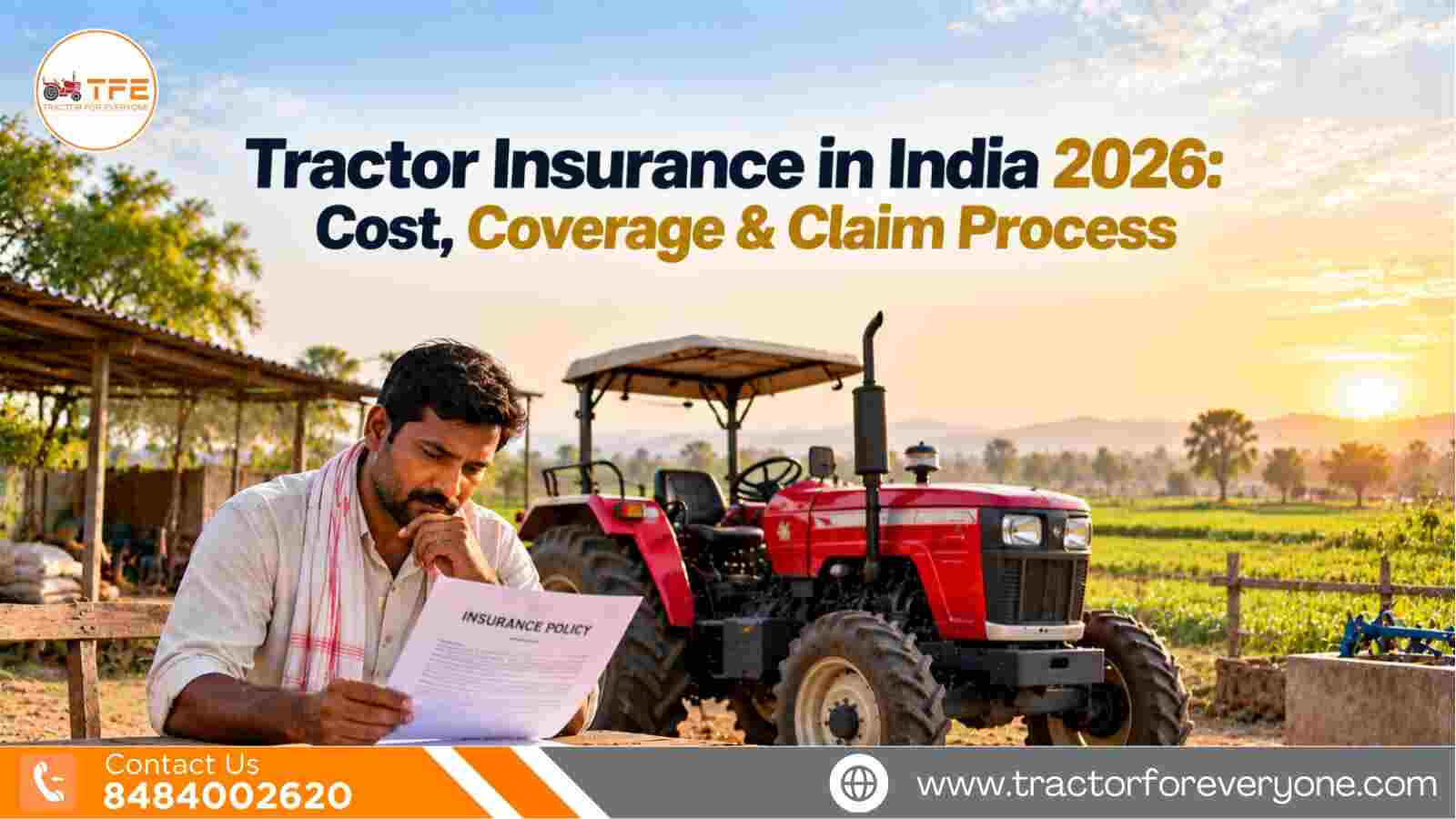
Tractor insurance in India protects eligible policyholders against specified financial liabilities arising from accidents and, under suitable policies, damage to the insured tractor. Third-party motor insurance is generally mandatory for vehicles used on public roads, while a comprehensive or package policy can provide additional protection for the tractor itself, subject to its terms and exclusions.
For Indian farmers, choosing the right tractor insurance policy means understanding the premium, Insured Declared Value (IDV), third-party liability, own-damage cover, exclusions and claim requirements. This guide by Tractor For Everyone explains how tractor insurance works in 2026, how to compare policies and what to do after an accident or other insured event.
Tractor insurance is a motor insurance policy designed to cover specified risks associated with an insured tractor. Depending on the policy selected, it can cover legal liability to third parties, accidental damage to the tractor, theft and certain natural or external events.
A tractor may be an important farm asset used for ploughing, sowing, transporting inputs and operating implements. An appropriate policy can help reduce the financial impact of covered incidents, but it does not cover every loss automatically.
The main types of tractor insurance are:
Third-party insurance: Covers eligible legal liabilities for injury, death or property damage caused to a third party, within the applicable law and policy terms.
Comprehensive or package insurance: Typically combines third-party liability with own-damage cover for the insured tractor.
Own-damage cover: Protects the insured vehicle against specified damage when purchased under an eligible policy or arrangement. It does not replace legally required third-party cover.
The exact coverage depends on the insurer's policy wording, vehicle classification, declared use, endorsements and applicable law. Read the policy schedule and exclusions before paying the premium.
Third-party motor insurance is generally compulsory for a motor vehicle used in public places in India under the Motor Vehicles Act, 1988. Farmers should confirm the applicable requirements for their tractor, trailer and intended use rather than assume that farm use automatically removes the insurance obligation.
Third-party insurance is primarily intended to cover legal liability to other people. It does not ordinarily pay for damage to the policyholder's own tractor unless own-damage cover is also in force.
Before using a tractor, check:
Whether the policy is valid and appropriate for the registered vehicle.
Whether the tractor's declared use matches its actual use.
Whether an attached trailer needs separate declaration, registration or insurance.
Whether the driver has the appropriate valid driving licence and complies with applicable requirements.
Whether the registration certificate and other required documents are current.
The Insurance Regulatory and Development Authority of India (IRDAI) explains the difference between liability-only and comprehensive motor insurance and outlines factors that influence premiums.
There is no single tractor insurance price that applies to every tractor in India. The premium depends on the type of cover, insurer, tractor's age and value, registration and usage details, applicable third-party rates, selected add-ons and other underwriting factors.
An insurer may quote different prices for the same tractor depending on the coverage and deductibles selected. Therefore, compare policies on the basis of protection and exclusions, not just the lowest premium.
| Factor | How it can affect the premium |
|---|---|
| Type of policy | Third-party-only and comprehensive policies provide different levels of protection |
| Tractor age and condition | May affect own-damage underwriting and valuation |
| Insured Declared Value (IDV) | Influences the amount considered for eligible total-loss or theft settlements |
| Tractor model and specifications | Vehicle details may influence underwriting and pricing |
| Location and usage | Registration location and declared use can affect the quote |
| Claims history | May influence eligible discounts or pricing |
| Deductibles and add-ons | Can change the premium and the amount payable during a claim |
| Trailer or accessories | May need separate declaration or additional cover |
Request quotes from multiple authorised insurers using the same tractor details and broadly comparable cover. Check the IDV, third-party liability, own-damage protection, deductibles, exclusions, add-ons and claim process.
Do not select a policy solely because it is cheaper. A low premium may come with a lower IDV, higher deductible or narrower coverage. Ask the insurer for a written quote and a copy of the policy wording before making a decision.
Coverage depends on the policy. A comprehensive policy may cover specified accidental damage, theft, fire and certain natural or external events, while third-party insurance focuses on liability to others.
Common cover areas include:
Third-party liability: Eligible legal liability for death, bodily injury or property damage caused to another party.
Accidental damage: Damage to the insured tractor from covered accidental events.
Theft: Loss of the tractor due to theft, subject to policy conditions and claim documentation.
Fire and specified natural events: Events such as fire, flood or storm may be covered when included in the applicable policy terms.
Optional add-ons: Some insurers offer additional protections for eligible risks. Availability and conditions vary.
A policy may also require the tractor's use, trailer details, accessories and other relevant information to be declared correctly. If a tractor is used for an activity not permitted by the policy, claim eligibility can be affected.
Tractor insurance excludes certain losses, and the exact exclusions differ by policy. Common restrictions may include ordinary wear and tear, mechanical or electrical breakdown not caused by an insured event, consequential loss, and damage arising while the vehicle is being used contrary to policy conditions.
Potential exclusions or limitations include:
Normal ageing, rust and routine maintenance.
Mechanical breakdown not linked to an insured event.
Driving without a valid licence or other required authorisation.
Use outside the permitted or declared purpose.
Intoxicated driving or other prohibited conduct.
Damage outside the policy's coverage or geographical scope.
Deductibles and specific exclusions listed in the policy wording.
These are general examples, not a complete list for every policy. Do not assume a claim will be rejected or accepted based on a short summary. The insurer will assess the circumstances, applicable law and actual policy wording.
The documents required depend on whether you are buying or renewing insurance, transferring ownership, or making a claim. Keeping the tractor's records organised can help reduce delays.
For a policy purchase or renewal, insurers may request:
Registration Certificate (RC).
Existing insurance policy, if any.
Tractor model and registration details.
Engine and chassis numbers.
Owner's identity and contact information.
Details of the declared use and any trailer, where relevant.
Inspection details if required by the insurer.
For a claim, the insurer may request the claim form, RC, policy details, driving licence, photographs, repair estimates, repair invoices and payment receipts. An FIR or other police documentation may be required for certain accidents, thefts or third-party incidents. The insurer's checklist and the circumstances of the loss determine the final requirements.
To make a tractor insurance claim, notify the insurer promptly, follow its instructions, provide the requested evidence and wait for any required inspection before authorising repairs. The exact process depends on the type of claim, the policy and whether the insurer offers an eligible cashless repair arrangement.
Move people away from danger and contact emergency services or the police when necessary. If another person is injured or third-party property is damaged, follow the applicable reporting requirements.
Contact the insurer through its official helpline, website, app or agent. Report the incident promptly and obtain a claim reference number. Ask whether the tractor needs to remain at the site or be moved to a specified workshop.
Take clear photographs and record the date, location and circumstances of the incident where it is safe to do so. Keep details of witnesses and other vehicles involved when relevant. Do not put yourself at risk to collect evidence.
The insurer may appoint a surveyor to assess the loss before repairs proceed. Follow the insurer's instructions and avoid starting non-emergency repairs before inspection or written approval, where required.
Provide the completed claim form and the requested documents, such as the RC, policy details, driving licence, estimate and photographs. Theft or serious accident claims may require additional documents, including police records.
Under a cashless arrangement, the insurer may settle approved repair costs directly with a network workshop, subject to policy terms and the applicable deductible or non-covered expenses. Under reimbursement, the policyholder may need to pay the workshop first and submit eligible bills for assessment.
Review the approved amount, deductions, deductible and any items not covered. If you disagree with the decision, request a written explanation and follow the insurer's grievance process.
IRDAI's official motor insurance guidance lists common claim documents and advises policyholders to check their policy for the complete requirements:
Renewing tractor insurance before the expiry date helps avoid a lapse in cover. Compare the renewal quote with alternative offers, but ensure that the new policy meets your legal and operational requirements.
A typical renewal process is:
Visit the insurer's official website or contact an authorised intermediary.
Enter the registration number and required tractor details.
Review the current policy, claims history and declared usage.
Compare third-party and comprehensive options, IDV, deductibles and add-ons.
Check all owner, tractor and trailer details for accuracy.
Pay through the authorised payment channel.
Download the policy schedule and verify its effective dates.
If the policy has expired, contact the insurer before using the tractor. A vehicle inspection may be required before own-damage cover is issued. Do not assume that a payment receipt alone confirms that all requested coverage is active; check the issued policy document.
Tractor insurance can help protect farmers against specified third-party liabilities and, with suitable own-damage cover, eligible damage to an insured tractor. The right choice depends on the tractor's value, how it is used, the policy conditions and the farmer's ability to manage an unexpected repair or replacement cost.
For 2026, compare actual quotes instead of relying on a universal premium estimate. Check the insurer's current policy wording, declare the tractor's use accurately, renew on time and follow the claim procedure promptly after an incident.
Tractor For Everyone helps farmers research tractors and agricultural equipment. Use its tractor information and comparison resources alongside the insurer's official documents when making a purchase or insurance decision.
Popular Blogs View All

Popular Video View All
Best Used Car, Services, Auto Parts, Rent Car Available for Buy and Sell Near By Go Ahead
