Best Used Car, Services, Auto Parts, Rent Car Available for Buy and Sell Near By Go Ahead
- Swaraj Price 2025: Latest Swaraj Tractor Price List and On-Road Rates in India
- Swaraj 855 FE Tractor Review 2025 Features, Price and Performance Explained
- Best Kubota Mini Tractors for Orchard and Vineyard Farming
- महिंद्रा मिनी ट्रैक्टर - कीमत, मॉडल, और सुविधाएँ
- Best Combine Harvester in India (2026) – Price ₹15–35 Lakh & Top 5 Models
- महाराष्ट्र फार्मर आयडी: ऑनलाइन नोंदणी प्रक्रिया, कागदपत्रे आणि फायदे
- Best Tractors in India 2025: Top 10 Picks for Every Farm Size
- Sonalika Tractor Price 2025 Complete List of Models, Series and Latest Offers
- Best Mini Tractors in India (10–20 HP) – Price, Features & Top Models [2026]
- Swaraj Tractor Price List 2025: Best Tractors for Small, Medium & Large Farms
Used Tractor Valuation Guide: How TFE Helps You Get the Best Resale Price
A used tractor's valuation is the fair market price it can fetch today, based on its age, working hours, physical condition, brand demand, and documentation. TFE's tractor valuation tool calculates this instantly by comparing your tractor's details against real resale data from verified listings across India.
Selling a tractor without knowing its true worth almost always means losing money — either to an underpriced quick sale or a buyer who negotiates using information you don't have. This guide breaks down exactly how valuation works, what affects your price, and how to use it before you list your tractor for sale.
What Is Used Tractor Valuation?
Used tractor valuation is the process of estimating a tractor's current resale price by comparing it against similar tractors already sold or listed in the market. It accounts for depreciation, usage, condition, and demand rather than just the original purchase price.
Unlike a car, a tractor's value doesn't depreciate on a fixed yearly curve. Working hours, implement compatibility, and regional demand for a specific brand or HP range can matter more than age alone. This is why a simple "age × depreciation rate" formula often gives a misleading number.
Key terms to know:
- Fair market value — the price a willing buyer would pay a willing seller under normal conditions, based on current listings.
- Depreciation rate — the yearly percentage drop in value, typically steeper in the first 3–5 years.
- Working hours — total hours logged on the engine meter; a more reliable wear indicator than age for tractors used seasonally.
- Resale demand index — how actively a brand/HP combination is being searched and purchased in the used market right now.
Key Factors That Affect Your Tractor's Resale Value
The five factors below account for most of the price difference between two tractors of the same model and year. Understanding them lets you predict roughly where your tractor will land before running a formal valuation.
- Age and engine hours — Lower hours relative to age signals lighter use and commands a higher price, even on an older tractor.
- Brand and model demand — Tractors from brands with strong regional service networks (Mahindra, Swaraj, Massey Ferguson, John Deere) hold value better because resale buyers trust parts availability.
- Physical condition — Engine health, tyre life, hydraulics, clutch, and paint/body condition are inspected individually and each can shift price by 3–8%.
- Documentation and ownership history — A clean RC, complete service records, and single-owner history reduce buyer risk and justify a higher asking price.
- Regional and seasonal demand — Prices for the same tractor can vary 5–10% between states, and rise just before Kharif or Rabi sowing seasons when demand spikes.
How to Calculate Your Tractor's Resale Value
A reliable valuation starts with your tractor's base depreciated price, then adjusts it up or down using condition and demand multipliers. This two-step method is what most professional appraisers and valuation tools use, including TFE's calculator.
Step-by-step approach:
- Start with the base value — original ex-showroom price minus standard depreciation for the number of years owned (typically 12–15% in year one, tapering to 5–8% annually after year five).
- Adjust for engine hours — subtract further value if hours are significantly above the average for that age (roughly 500–800 hours/year is considered normal usage).
- Apply a condition multiplier — inspect tyres, engine smoke/sound, hydraulic lift response, and body rust; each issue typically reduces value by 2–5%.
- Factor in documentation — a complete paper trail and no loan hypothecation pending can add back 3–6% versus an incomplete-documentation tractor.
- Check live regional demand — cross-reference against current listings for the same brand and HP in your state to confirm the number is realistic, not just theoretical.
How TFE's Tractor Valuation Tool Works
TFE's valuation tool removes the guesswork by running these same steps automatically against a live database of tractor listings across India. You enter the brand, model, year, hours, and condition, and it returns an estimated price range within seconds — free of cost.
What the tool checks:
- Brand and model-specific depreciation curves
- Current listing prices for comparable tractors in your state
- Engine hours against expected usage benchmarks
- Condition inputs you provide (tyres, engine, hydraulics, body)
- Seasonal demand trends for that HP category
The result is a price range rather than a single number, because real buyers negotiate within a band — giving you room to set a realistic asking price on TFE's marketplace instead of guessing.
Common Mistakes That Lower Resale Value
Most sellers lose 8–15% of their tractor's fair value through avoidable mistakes rather than the tractor's actual condition. Fixing these before listing is the fastest way to protect your price.
- Listing without servicing first — a tractor that clearly needs an oil change or tyre replacement invites lowball offers, even if mechanically sound.
- Skipping documentation cleanup — missing RC transfer papers or an unresolved loan hypothecation scares off serious buyers.
- Ignoring regional timing — selling right after harvest, when supply is high and demand is low, typically fetches a lower price than listing before the next sowing season.
- Setting price from memory, not data — relying on what a neighbour sold their tractor for, rather than checking current listings for your specific model.
- Under-representing implements included — not mentioning attached implements (MB plough, rotavator, trailer) in the listing undervalues the total package.
Tips to Maximise Your Tractor's Selling Price Before Listing
A few low-cost fixes before you list can noticeably improve your final sale price. These are the same checks buyers instinctively look for first.
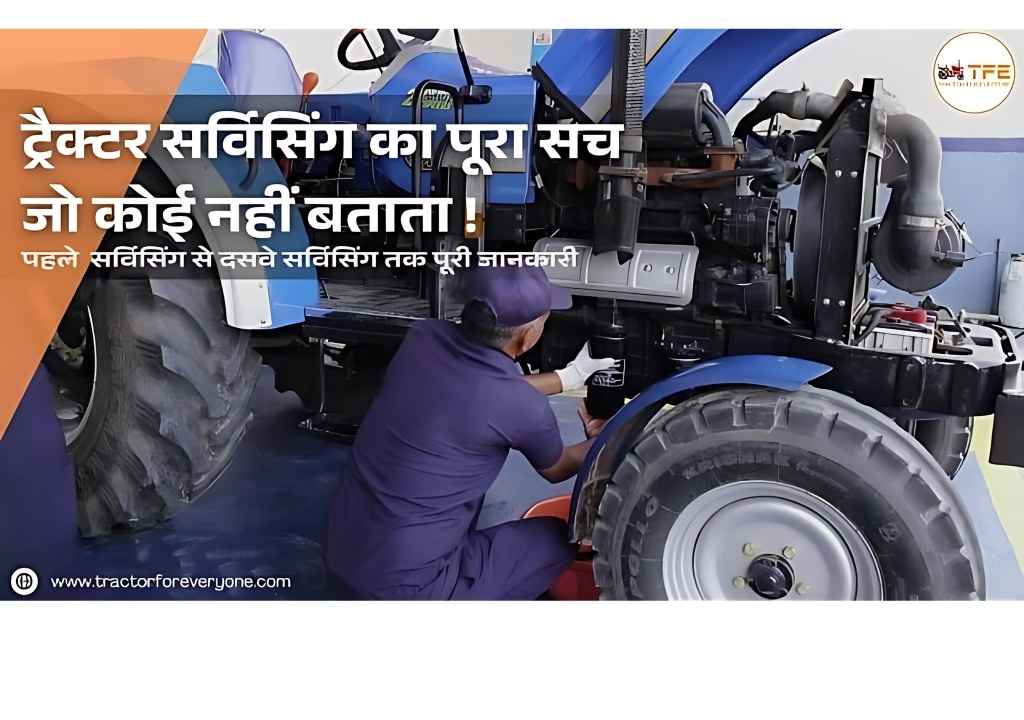
- Get a basic service done — oil, filters, and coolant top-up — before photographing or listing the tractor.
- Replace or repair badly worn tyres if the cost is lower than the value they'd add back (often the single highest-ROI fix).
- Wash and touch up paint/rust spots; visual condition strongly influences a buyer's first offer.
- Compile all documents — RC, insurance, service records, and No Objection Certificate (NOC) if there's a loan — into one folder.
- List with clear engine-hour and year details rather than vague terms like "well maintained," since specific data builds buyer trust and reduces back-and-forth negotiation.
Where to Sell Your Used Tractor for the Best Price
Selling through a verified marketplace like TFE generally yields a better price than informal channels such as local dealer trade-ins or word-of-mouth sales, because it exposes your listing to a wider pool of serious, ready-to-buy farmers.
Dealer trade-ins are convenient but almost always price in a resale margin for the dealer, meaning you absorb that cost. A verified marketplace listing, backed by TFE's valuation estimate, lets you negotiate from an informed position instead of accepting the first offer.
Frequently Asked Questions
1. How is a used tractor's resale value calculated?
Resale value is calculated by starting with the depreciated base price for the tractor's age, then adjusting for engine hours, physical condition, documentation completeness, and current regional demand for that brand and HP.
2. What is the average resale value of a 5-year-old tractor in India?
It varies widely by brand, HP, and usage, but most 5-year-old tractors retain roughly 45–60% of their original ex-showroom price if maintained well and used within normal seasonal hours.
3. Does tractor age or engine hours matter more for resale value?
Engine hours generally matter more than calendar age, because a newer tractor with unusually high hours can be worth less than an older one that has been lightly used.
4. How can I check my tractor's valuation online for free?
You can use TFE's tractor valuation tool by entering the brand, model, year, engine hours, and condition details to get an instant estimated price range at no cost.
5. What documents increase a used tractor's resale price?
A clear RC in the seller's name, complete service history, insurance papers, and a loan No Objection Certificate (if applicable) all reduce buyer risk and typically support a higher asking price.
Write a Comment
Popular Blogs View All
-
Swaraj Price 2025: Latest Swaraj Tractor Price List and On-Road Rates in India
07/24/2025, POSTED BY ADMIN -
Swaraj 855 FE Tractor Review 2025 Features, Price and Performance Explained
07/19/2025, POSTED BY ADMIN -
Best Kubota Mini Tractors for Orchard and Vineyard Farming
01/13/2026, POSTED BY ADMIN
Popular Video View All
-
महाराष्ट्रात Second Hand Tractors ची उत्तम संधी! तुमच्या बजेटमध्ये, विश्वासार्ह ट्रॅक्टर मिळवा!
12/16/2025, POSTED BY ADMIN -
TFE Reaper Machine Working | Full Multi-Crop Cutting Process!
12/16/2025, POSTED BY ADMIN -
5 Things You Need to Know Before Buying a Solis E Series Tractor
05/17/2025, POSTED BY ADMIN