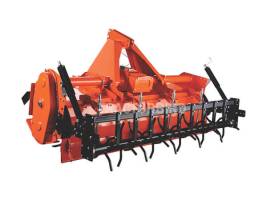
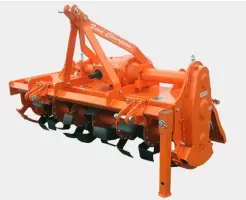
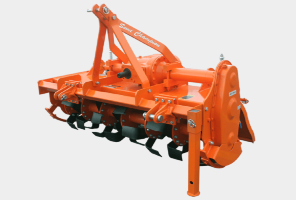
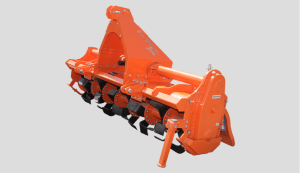
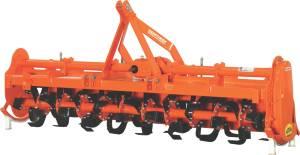
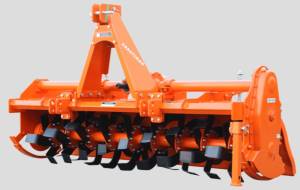
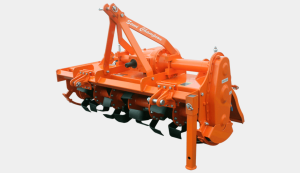
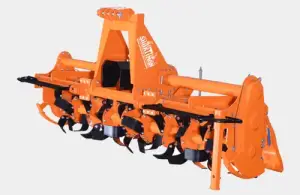
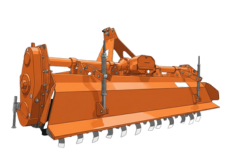
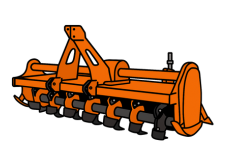
The Hind 299 RTR Rotavator 60″ has been developed to meet the needs of modern Indian farmers who seek efficiency, durability, and cost-effectiveness in land preparation. Its design combines practical usability with professional-grade tillage capabilities, making it suitable for a wide range of soil and crop management tasks.
This implement is particularly valuable for farmers managing small to medium fields, including orchard plots, vegetable gardens, and fragmented farmland. Its compact size ensures that it can operate in tighter spaces where larger machines cannot reach, while its sturdy build and precise engineering guarantee reliability even under demanding conditions.
Key Features
- Durable and Compact Frame: Designed for strength and longevity, the frame supports stable operation even on uneven or marginal lands, ensuring consistent soil pulverization and leveling.
- 36 L-type Blades (Optional C-type): These high-quality blades are designed for optimal soil cutting and mixing. They effectively break clods, mix residues, and prepare a fine seedbed.
- Single-speed Gearbox with Side Chain Drive: Ensures smooth power transmission and reduced mechanical stress. The oil bath lubrication system minimizes wear and reduces routine maintenance requirements.
- 540 RPM PTO Compatibility: Matches the standard tractor PTO speed, allowing easy integration with a wide range of tractors without modification.
- Adjustable Depth Control Skids: Enable precise control over tillage depth, ensuring consistent seedbed preparation according to crop requirements.
- Category I 3-point Hitch: Provides stable attachment to the tractor and ensures smooth operation even in challenging field conditions.
- Rust-Resistant Coating: Protects the implement from corrosion, extending operational life in humid or wet conditions.
- Low Operating Cost: By combining multiple tillage actions in one implement, the Hind 299 RTR reduces the need for additional equipment, cutting overall operational costs.
- Versatile Usage: Apart from seedbed preparation, it can also be used for residue incorporation, organic matter mixing, and general soil aeration, making it suitable for multi-crop operations.
Detailed Specifications of Hind 299 RTR Rotavator 60″
|
Parameter
|
Specification
|
|
Working / Cutting Width
|
60 inches (approx. 5 feet)
|
|
Suitable Tractor HP
|
40–45 HP
|
|
Drive Type / Transmission
|
Single-speed gearbox, side chain drive (oil bath)
|
|
Number of Blades
|
36 standard L-type blades (C-type optional)
|
|
Working Depth
|
Approx. 6 inches (adjustable via skids)
|
|
PTO Speed
|
540 RPM
|
|
Approx. Weight
|
~375 kg
|
|
Hitch Type
|
Category I 3-point hitch
|
|
Depth Control
|
Adjustable skids for precision tillage
|
These specifications make the Hind 299 RTR a highly reliable implement for efficient soil preparation, combining durability with operational simplicity. Its design ensures consistent performance and minimal downtime, even in small and irregular plots.
Hind 299 RTR Rotavator – Price in India
The Hind 299 RTR Rotavator 60″ typically falls within the price range of ₹65,000 – ₹95,000, depending on dealer location, availability, and optional features such as C-type blades or additional accessories. For small to medium-sized farms, this investment can yield significant returns by reducing manual labour, improving operational efficiency, and providing a high-quality seedbed for better crop establishment.
Given its durability and low maintenance needs, the cost-to-benefit ratio of this implement makes it an excellent value for farmers who want a reliable tillage solution for multiple cropping seasons.
Why Choose Tractor For Everyone for the Hind 299 RTR Rotavator?
At Tractor For Everyone, we simplify the process of finding the right agricultural machinery. Our dedicated section for the Hind 299 RTR Rotavator allows farmers to explore detailed specifications, features, and pricing information in one convenient place. We aim to provide a transparent and hassle-free buying experience, helping farmers make informed decisions based on their farm size, tractor HP, and cropping patterns.
We also provide tools such as HP filters, price comparisons, and expert guidance, allowing farmers to shortlist models that best suit their operational requirements. With trusted dealer connections, genuine product listings, and comprehensive information, Tractor For Everyone ensures that every purchase is secure, convenient, and value-driven.
Popular Hind Rotavator Models
|
Model Name
|
Key Features
|
Suitable For / Best Use
|
|
Hind 299 RTR Rotavator (60″)
|
36 L-type blades, 5 ft working width, 40–45 HP tractors
|
Seedbed preparation, residue mixing, general tillage in small to mid fields
|
|
Hind 299 RTR Rotavator (69″)
|
42 L-type blades, 5.75 ft working width, 50–60 HP tractors
|
Larger acreage tillage, faster coverage for medium to large farms
|
Note: Actual availability, features, and model names may vary depending on dealer stock and location. Always confirm specifications before purchase.
Benefits – What Makes Hind 299 RTR Rotavator Stand Out
- Efficient One-Pass Soil Preparation:
The rotavator allows simultaneous cutting, mixing, and leveling of soil. Unlike traditional ploughing followed by manual puddling or spading, the Hind 299 RTR reduces the number of passes and labor required, saving both time and fuel.
- Labour, Fuel, and Time Savings:
Mechanization significantly reduces manual effort, especially in small to medium fields. Farmers can prepare multiple plots in the same time it would take to manually plough a single plot.
- Versatility in Soil Types and Crops:
From sandy to clay-heavy soils, this rotavator handles varying textures efficiently. It is suitable for cereals, pulses, vegetables, and even orchard land preparation.
- Durable and Low-Maintenance Design:
Features such as an oil-bath chain drive, sturdy frame, and adjustable depth skids ensure long-term reliability and minimal servicing requirements.
- Precision Seedbed Preparation:
Uniform soil mixing and levelling improve seed-to-soil contact, promoting better germination, stronger root development, and ultimately higher yields.
- Residue Incorporation:
Crop residues can be evenly mixed into the soil, enhancing fertility and reducing the need for additional organic amendments.
Use Cases – Who Should Use Hind 299 RTR Rotavator 60″
The Hind 299 RTR Rotavator is particularly well-suited for:
- Small to Mid-sized Farmers: Those cultivating 1–10+ acres of land can significantly reduce time and labour for seedbed preparation. Its compact size ensures easy operation in smaller plots or irregular fields.
- Vegetable Growers and Orchard Farmers: The 60″ width and adjustable depth allow easy maneuverability around trees, irrigation channels, and narrow pathways, making it ideal for orchards, nurseries, and horticultural crops.
- Farmers Using 40–45 HP Tractors: The implement is optimized for tractors in this power range, ensuring smooth operation and efficient performance.
- Multi-crop and Rotational Farming: While designed for general tillage, it is also suitable for residue incorporation, organic matter mixing, and seedbed preparation for multiple crop types such as wheat, maize, pulses, vegetables, and oilseeds.
- Contractors and Service Providers: Agricultural service providers can use the Hind 299 RTR to offer tillage services to smallholder farmers efficiently, thanks to its manageable size and relatively fast coverage in smaller fields.
- Farms with Varied Soil Conditions: Sandy, loamy, and moderately clayey soils are all suitable, making it a versatile tool for farms with mixed soil types.
By targeting these user groups, the Hind 299 RTR provides maximum value and ensures that its features are fully leveraged for improved productivity.
Operating Considerations & Best Practices
To achieve optimal performance and ensure long-term durability, farmers should follow these recommended practices when using the Hind 299 RTR Rotavator:
- Tractor Compatibility:
Ensure the tractor used is within the recommended 40–45 HP range. Using a lower-powered tractor may result in insufficient rotor torque, while overpowered tractors may not fully utilize the implement’s potential.
- Proper 3-Point Hitch and PTO Connection:
Attach the rotavator using the Category I 3-point hitch. Ensure that the PTO shaft is securely connected and that the protective cover is in place to prevent accidents. Always check the PTO alignment to avoid excessive vibration or wear.
- Field Conditions:
The Hind 299 RTR is suitable for a variety of soils but avoid extremely rocky or heavily compacted fields, as this can damage the blades. For compacted soils, it is advisable to first perform light ploughing to loosen the soil before rotavating. Excessive waterlogged fields may reduce efficiency and increase wear on moving components.
- Blade Maintenance:
Regularly inspect the 36 L-type blades for signs of wear, bending, or breakage. Replace damaged blades promptly to maintain uniform soil pulverization and avoid unnecessary stress on the gearbox. Sharpening may be required occasionally depending on soil conditions.
- Gearbox and Chain Drive Care:
Lubricate the gearbox as per the manufacturer’s instructions. The oil bath side chain drive should be checked periodically for wear and tension. Keeping these components well-maintained ensures smooth operation and reduces downtime.
- Depth Adjustment:
Adjust the depth control skids according to crop and soil requirements. For vegetables or shallow crops, shallower tillage is preferred; for cereals or residue mixing, deeper tillage ensures effective soil incorporation.
- Safety Practices:
Always keep bystanders and animals away while operating the rotavator. Never attempt adjustments or maintenance while the PTO is engaged. Use the PTO cover consistently and engage the tractor in neutral before any intervention.
- Storage After Use:
Clean soil, mud, and crop residues from the blades, rotor, and gearbox. Apply light grease or rust-preventive spray to metal surfaces and store in a dry, covered location to extend lifespan.
By following these operational best practices, farmers can maximize both performance and longevity of the Hind 299 RTR Rotavator.
Comparing Hind 299 RTR Rotavator with Other Rotavators & Implements
When selecting a tillage implement, it is important to understand how the Hind 299 RTR compares with other rotavators and traditional methods:
Rotavator vs. Traditional Plough + Manual Tillage
Traditional ploughing followed by manual spading or puddling is labor-intensive, time-consuming, and may result in uneven seedbeds. The Hind 299 RTR combines cutting, mixing, and leveling in a single pass, producing a finer and more uniform seedbed, reducing labor costs and field operation time significantly.
Rotavator vs. Other Rotavator Models
- Smaller Models (e.g., 48″–55″): Ideal for very small plots but require more passes to cover medium-sized fields. The Hind 299 RTR 60″ strikes a balance between coverage and maneuverability.
- Larger Models (69″ or 7 Feet): Suitable for larger acreage, but they require more powerful tractors and can be difficult to operate in smaller plots or around obstacles. For farmers with 40–45 HP tractors and smaller/mid-sized fields, the Hind 299 RTR 60″ is the most practical choice.
- Multi-Speed vs. Single-Speed Gearbox: While multi-speed rotavators offer adjustable rotor speeds for specific conditions, the single-speed gearbox of the Hind 299 RTR is simpler, reliable, and easier to maintain, reducing potential maintenance issues for smallholder farmers.
Rotavator vs. Manual or Animal-Drawn Implements
Mechanized rotavators like the Hind 299 RTR save considerable time and labor compared to manual spading or bullock-drawn tillage, especially on medium-sized plots. The result is a more uniform and well-prepared seedbed, contributing to better crop establishment and yield potential.
Real-World Benefits – What Farmers Gain
Based on typical use and field feedback, the Hind 299 RTR Rotavator offers multiple tangible benefits:
- Significant Reduction in Field Preparation Time:
Fields that previously took several days for manual tillage can now be prepared in hours, allowing timely sowing or transplanting.
- Lower Dependence on Labour:
Mechanization reduces the need for seasonal labor, which is often costly or scarce during peak periods.
- Improved Crop Establishment:
Uniform seedbeds ensure better water retention, improved root penetration, and stronger seedlings, ultimately contributing to higher yields.
- Fuel Efficiency:
The compact design and single-pass operation reduce fuel consumption compared to multiple ploughing and spading operations.
- Flexibility Across Crops and Soil Types:
Though optimized for general tillage, the rotavator can also incorporate residues, prepare vegetable plots, and aerate soils for multiple crops, making it a versatile investment.
- Better Farm Management:
Reduced field preparation time allows farmers to complete planting schedules efficiently, minimizing delays due to weather or labor shortages.
Potential Limitations & Things to Watch Out For
While the Hind 299 RTR offers numerous advantages, farmers should be aware of certain limitations:
- Tractor HP Limitation: Best suited for 40–45 HP tractors. Lower HP tractors may struggle, and higher HP tractors may not fully utilize the implement’s capacity.
- Extremely Rocky or Waterlogged Soils: Heavy stones or deep water can damage blades or rotor, so preliminary soil preparation may be required.
- Maintenance Requirements: Regular inspection of gearbox, chain drive, and blades is necessary to maintain optimal performance.
- Initial Investment Cost for Small Farms: For very small plots (<1 acre), the cost may seem high relative to land size, though long-term labor and fuel savings justify the investment.
- Not a Substitute for Deep Ploughing: Rotavators are best for secondary tillage; initial ploughing may still be required in virgin or heavily compacted land.
By understanding these limitations, farmers can plan operations effectively and ensure the rotavator delivers maximum productivity.
Guidance: Is Hind 299 RTR Rotavator Right for Your Farm?
The Hind 299 RTR is an excellent choice if you:
- Own or plan to use a 40–45 HP tractor.
- Cultivate small to mid-sized fields and require efficient seedbed preparation.
- Value time savings, reduced labor, and fuel efficiency.
- Require an implement that can operate in small or irregular plots.
- Maintain equipment properly to maximize lifespan.
- Want an implement that provides versatility across multiple crops or soil management tasks.
For farmers with very small plots, lower HP tractors, or extremely compacted/rocky soils, alternative implements or a combination of ploughing and rotavation may be more suitable.
Practical Tips for Field Use
- Pre-check Linkage and PTO: Ensure correct attachment and PTO alignment.
- Drain Excess Water: Avoid deep standing water; shallow puddling is acceptable.
- Light Preliminary Pass: In heavy soils, a shallow tillage before using the rotavator can improve results.
- Optimal Operating Speed: Use consistent tractor PTO speed to maintain uniform soil pulverization.
- Blade and Hub Maintenance: Clean mud and debris after use, inspect blades, and grease moving parts regularly.
- Check Seals and Bearings: Routine inspection ensures leak-proof operation and reduces wear.
- Safety Measures: Always use PTO cover, keep bystanders away, and shut off tractor before adjustments.
- Storage: Clean thoroughly, protect from rust, and store in a covered location.
Conclusion: Overall Value & Recommendation
The Hind 299 RTR Rotavator 60″ is a compact, versatile, and reliable tillage implement. It combines efficient soil pulverization, ease of operation, durability, and fuel efficiency, making it an ideal choice for small to mid-sized farms.
Its adjustable depth, 36 L-type blades, oil-bath chain drive, and Category I hitch ensure consistent performance across a variety of soil types and cropping conditions. For farmers with 40–45 HP tractors, it is an excellent value-for-money investment that reduces labor, shortens field preparation time, and improves crop establishment.
With proper care, the Hind 299 RTR can serve multiple cropping seasons and handle a wide range of soil preparation tasks beyond just seedbed tillage, offering long-term versatility and productivity gains.


 Sell Your Tractor










 ✔ Pros
  ✘ Cons




























.png)





.png)





.png)







.png)