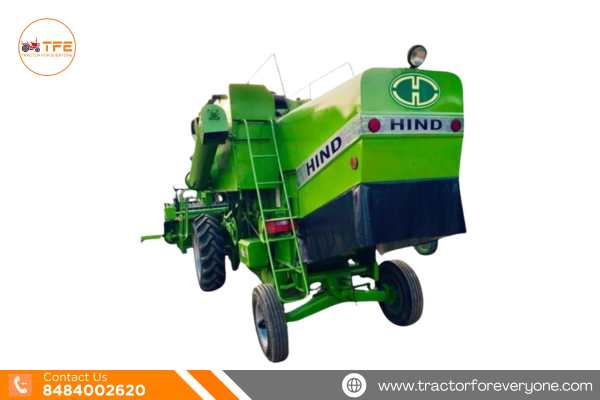
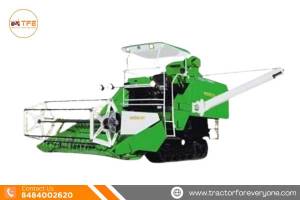
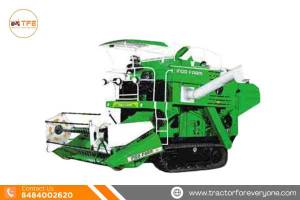
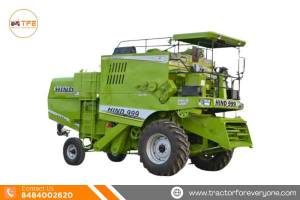
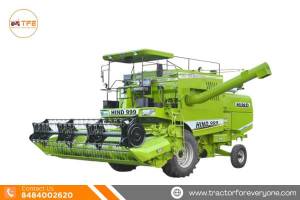
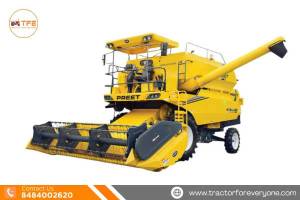
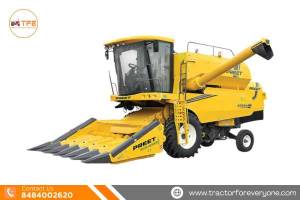
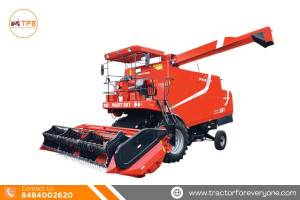
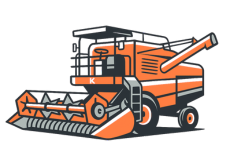
The Hind 799 is designed to meet the diverse harvesting demands of Indian farms under varied agrarian conditions. According to the manufacturer’s specifications:
Key Features:
- Self-propelled chassis – independent engine and drive system for efficient field navigation.
- Adjustable cutting width – typically 2.5–3 meters for optimal crop coverage.
- Multi-crop threshing cylinder – adjustable RPM settings for wheat, paddy, maize, and soybean.
- Large grain tank (2,500–3,000 liters) – minimizes unloading stops and increases daily harvesting efficiency.
- Hydrostatic transmission – enables smooth speed adjustments and better control in different field conditions.
- Advanced cleaning sieves – dual-layer sieves remove straw, dust, and debris for high-quality grain collection.
- Operator cabin with ergonomic controls – ensures comfort during long hours of operation.
- Easy-access service points – simplifies engine and component maintenance.
- Fuel-efficient diesel engine (80–100 HP) – delivers reliable power for continuous harvesting operations.
Model Summary:
The Hind 799 is optimized for medium to large Indian farms requiring a self-propelled solution for multiple crops. Its robust engine, wide harvesting header, and adjustable threshing system ensure faster crop collection, reduced losses, and minimal manual labour. High-quality components and easy maintenance guarantee longevity under demanding field conditions.
Detailed Specifications of Hind 799 Self Propelled Multicrop Combine Harvester
|
Parameter
|
Specification
|
|
Engine Power
|
85–100 HP Diesel Engine
|
|
Transmission
|
Hydrostatic Drive with Adjustable Speed
|
|
Harvesting Width
|
2.5–3.0 meters (approx.)
|
|
Grain Tank Capacity
|
2,500–3,000 liters
|
|
Fuel Tank Capacity
|
200–250 liters
|
|
Threshing Cylinder
|
Adjustable RPM, multi-crop capability
|
|
Cleaning System
|
Dual-layer sieves with blower
|
|
Steering
|
Self-propelled hydrostatic steering
|
|
Operator Cabin
|
Ergonomic with adjustable seat and controls
|
|
Cutting Height
|
30–120 mm adjustable
|
|
Straw Management
|
Chopper / Spreader options available
|
|
Machine Weight
|
Approx. 4,500–5,000 kg
|
|
Additional Features
|
Easy-access panels, hydraulic header lift, safety interlocks, tool kit included
|
These specifications make the Hind 799 a versatile and reliable implement for modern multi-crop harvesting, delivering both efficiency and precision.
Hind 799 Self Propelled Combine Harvester – Price in India
According to recent listings and authorized dealers, the Hind 799 typically falls within a price range of ₹26.50–35 Lakh.
Some sources indicate a starting price around ₹32,50,000. Considering the productivity gains, labour savings, fuel efficiency, and long-term durability, this represents a strong investment for medium to large farms focusing on multiple crops.
Why Choose Tractor For Everyone for the Hind 799 Self Propelled Combine Harvester?
At Tractor For Everyone, we make it easier for farmers to find the right farm machinery with complete confidence. Our dedicated page for the Hind 799 provides detailed specifications, features, images, and price information in one place, ensuring a smooth buying experience.
We offer smart tools like price filters, header size filters, comparison options, and expert guidance to help you select the right model for your farm. Transparent pricing, trusted dealer connections, and genuine product listings ensure peace of mind with every purchase.
Popular Hind 799 Variants & Related Models
|
Model Name
|
Key Features
|
Suitable For / Best Use
|
|
Hind 799 Self Propelled
|
Multi-crop harvesting, 2.5–3 m header, 2,500–3,000 L grain tank
|
Paddy, wheat, maize, soybean farms, medium to large scale
|
|
Hind 799 Paddy Special
|
Paddy-focused threshing, straw spreader, adjustable cylinder RPM
|
Medium to large paddy fields
|
|
Hind 799 Wheat Model
|
Wider header options, chaff management, high-speed cylinder
|
Wheat and barley harvesting
|
|
Hind 799 Maize Version
|
Adjustable cylinder and chopper for maize stalks
|
Maize farms, residue management
|
|
Hind 799 Compact Model
|
Slightly smaller header, lighter build, cost-effective
|
Small to mid-size farms with multiple crops
|
Note: Actual model names and features may vary depending on dealer stock and season. Verify specifications before purchase.
Benefits – What Makes Hind 799 Stand Out
- High-Efficiency Multi-Crop Harvesting
Advanced threshing system ensures minimal grain loss, clean separation, and uniform grain quality across paddy, wheat, maize, and soybean.
- Time, Fuel, and Labour Savings
Self-propelled design and wide header reduce manual harvesting effort and time, increasing operational efficiency for large-scale farms.
- Operator Comfort and Safety
Ergonomic cabin with controls, air-suspension seat, and visibility ensure comfort during long harvesting hours while minimizing fatigue.
- Durability and Low Maintenance
Robust engine, hydrostatic transmission, and easy-access service panels allow long-term use with minimal downtime.
- Versatility Beyond Standard Crops
While designed for major cereals, the harvester can handle multiple crops, straw management, and residue handling, maximizing farm productivity.
Use Cases – Who Should Use Hind 799
- Medium to large farms cultivating multiple crops like paddy, wheat, maize, and soybean.
- Farmers seeking to reduce manual labour and improve harvesting speed.
- Farms with 80–100 HP tractors or operators looking for self-propelled solutions.
- Contractors or service providers offering harvesting services across multiple fields.
- Farms with moderate to large plots requiring uniform grain quality and minimal loss.
Hind 799 Operating Considerations & Best Practices
- Field Conditions – Avoid excessively uneven or waterlogged fields.
- Header Adjustment – Set cutting height according to crop type and field conditions.
- Regular Maintenance – Inspect blades, sieves, cylinder RPM, and lubricate moving parts.
- Operator Training – Ensure familiarity with hydrostatic drive, safety interlocks, and self-propelled operation.
- Grain Unloading – Empty grain tank timely to avoid overloading or spillage.
- Storage – Clean, dry, and store in sheltered area when not in use to prevent rust.
Comparison: Hind 799 vs Other Harvesters
Traditional Manual Harvesting vs Hind 799 – saves time, reduces labour dependency, and minimizes grain loss.
Small Combine vs Hind 799 – smaller models suitable for <2-acre plots; Hind 799 optimizes efficiency for medium to large farms.
Other Self-Propelled Models – Hind 799 balances engine power, harvesting width, and multi-crop capability for Indian farm conditions.
Real-World Benefits: What Farmers Gain
- Faster harvesting with minimal crop loss.
- Reduced manual labour and operational costs.
- Better grain quality and uniform threshing.
- Flexibility for multiple crops and residue management.
- Long-term durability and reliable performance across seasons.
Potential Limitations & Things to Watch Out For
- Requires trained operators for safe and effective use.
- Not suitable for extremely small or fragmented plots.
- Regular maintenance is essential for long-term efficiency.
- High initial investment may be challenging for small-scale farms.
- Best used in relatively level fields; performance may drop on steep slopes.
Practical Tips for On-Field Use
- Pre-check header, hydraulic and cylinder settings.
- Adjust cutting height according to crop type.
- Avoid harvesting in excessively wet or muddy conditions.
- Regularly clean sieves, cylinder, and grain tank.
- Use safety interlocks and cabin features to protect operator.
- Store in sheltered place post-harvest with proper lubrication.
Conclusion: Overall Value & Recommendation
The Hind 799 Self Propelled Multicrop Combine Harvester is a well-engineered, farmer-friendly machine delivering high efficiency, durability, and versatility. It stands out for medium to large farms cultivating multiple crops, providing faster harvesting, reduced labour, fuel efficiency, and superior grain quality.
For farms using 80–100 HP engines and requiring a multi-crop solution, this harvester represents a strong value-for-money investment. With proper maintenance and careful operation, it can serve across seasons, maximizing farm productivity and efficiency.


 Sell Your Tractor










 ✔ Pros
  ✘ Cons


















.png)




.png)




.png)






.png)