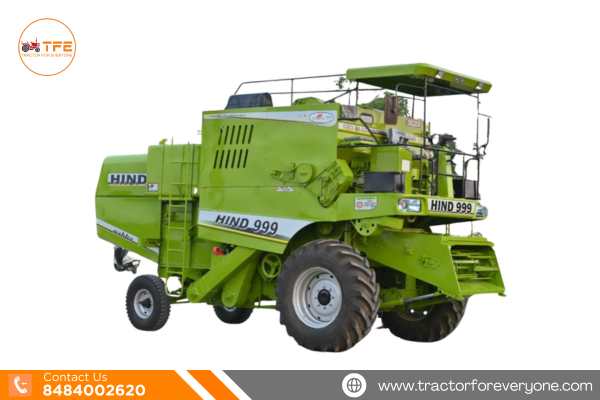
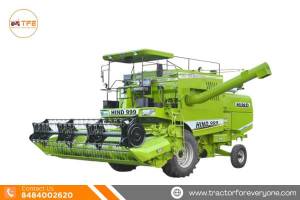
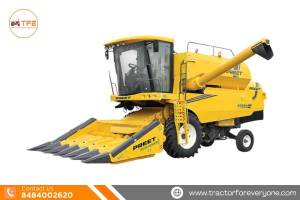
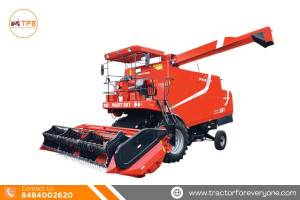
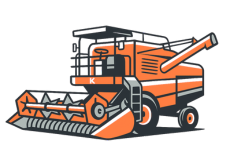
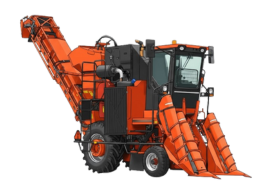
The Hind 999 Self Propelled Combine Harvester is specifically engineered for the demands of Indian farms cultivating cereals under varying climatic and soil conditions. It is built to handle large-scale harvesting efficiently while minimizing crop loss and labor dependency. Its design emphasizes ease of operation, durability, and high grain quality output.
Key Features
- Self-propelled hydrostatic drive system: Ensures smooth maneuvering and eliminates reliance on tractors, making operations faster and simpler.
- Large cutting width (2.8–3.0 meters): Allows faster coverage of extensive fields, reducing the number of passes and saving both fuel and operator time.
- Adjustable threshing drum: Can be fine-tuned for paddy, wheat, maize, and barley to ensure clean separation of grain from straw.
- High-efficiency cleaning system with sieves: Reduces impurities and broken grains, ensuring superior post-harvest grain quality.
- Spacious grain tank (2.5–3.0 tons capacity): Minimizes the frequency of unloading stops, allowing continuous operation over large fields.
- Operator-friendly cabin: Ergonomically designed for comfort during long harvesting periods, with a clear view of the cutting and threshing process.
- Heavy-duty cutter bar with adjustable height: Handles variable crop heights and densities efficiently, providing a uniform cut across different terrains.
- Easy maintenance access: Designed for quick inspections of engine, hydraulic systems, and threshing components, reducing downtime.
- Robust frame and reinforced components: Ensures long-term durability, capable of handling the rigorous demands of Indian fields.
- Hydraulic steering system: Enhances maneuverability, especially in medium to large-sized plots.
Model Summary
The Hind 999 is optimized for medium to large farms, supporting efficient harvesting across multiple cereal crops. Its self-propelled design eliminates dependence on tractors, while its advanced threshing and cleaning system ensures high grain recovery, minimal losses, and superior grain quality.
The machine’s robust construction, high-capacity grain tank, and adjustable components make it suitable for a variety of Indian field conditions, including uneven terrain, moderate waterlogging, and mixed soil types. With proper operator training and routine maintenance, the Hind 999 can deliver years of reliable performance, making it an invaluable investment for modern farming operations.
Detailed Specifications of Hind 999 Self Propelled Multicrop Combine Harvester
|
Parameter
|
Specification
|
|
Cutting Width
|
2800–3000 mm
|
|
Suitable Crops
|
Paddy, wheat, maize, barley, other cereals
|
|
Engine Power
|
90–100 HP
|
|
Threshing Drum
|
Adjustable speed, high-efficiency drum
|
|
Grain Tank Capacity
|
2.5–3.0 tons
|
|
Drive Type
|
Hydrostatic self-propelled
|
|
Separator Type
|
Axial flow / rotary separator
|
|
Cutter Bar Type
|
Heavy-duty, adjustable height
|
|
Fuel Tank Capacity
|
200–250 liters
|
|
Operational Speed
|
0–5 km/h (field), 0–10 km/h (road)
|
|
Machine Weight
|
4800–5200 kg
|
|
Additional Features
|
Ergonomic cabin, grain auger, hydraulic steering, easy maintenance access, reinforced frame, protective guards
|
These specifications make the Hind 999 a high-capacity, versatile harvesting machine capable of delivering timely and efficient operations for medium to large farms cultivating multiple crops across different seasons.
Hind 999 Combine Harvester – Price in India
The Hind 999 Self Propelled Multicrop Combine Harvester typically falls in the price range of ₹28,00,000 – ₹32,00,000, depending on dealer location, optional accessories, and configuration.
Some dealers report prices starting around ₹29,50,000 for base models with standard specifications. Considering the time savings, labor reduction, increased grain recovery, and durability, this machine offers a strong value proposition for medium to large-scale farms, especially those managing multiple cereal crops or needing timely harvests.
Investing in a Hind 999 is particularly worthwhile for farmers operating 5 acres or more, where mechanized harvesting significantly reduces labor dependency and accelerates crop collection — translating into higher efficiency and potential yield gains.
Why Choose Tractor For Everyone for the Hind 999 Combine Harvester?
At Tractor For Everyone, we aim to simplify the purchasing process for farmers, offering comprehensive information, expert guidance, and transparent pricing. Our dedicated section for the Hind 999 Combine Harvester ensures that farmers can make informed decisions based on detailed specifications, high-resolution images, features, and dealer information all in one place.
We provide tools such as:
- Price filters to compare options within your budget.
- Crop-specific guidance to select the most suitable harvester.
- HP and size filters to ensure compatibility with your operational scale.
- Comparison tools for alternate models and specifications.
- Trusted dealer connections to facilitate genuine and hassle-free purchases.
With these features, farmers can shortlist, compare, and purchase the Hind 999 confidently, without the risk of misinformation or mismatched models.
Popular Hind Combine Harvester Models
|
Model Name
|
Key Features
|
Suitable For / Best Use
|
|
Hind 999 Self Propelled
|
Wide cutter bar, self-propelled, multicrop, high-efficiency threshing
|
Medium to large farms, paddy, wheat, maize
|
|
Hind 888 Tractor Mounted
|
Tractor-driven, smaller width, simple threshing
|
Small farms, single-crop focus
|
|
Hind 1000 Advanced
|
Fully hydraulic, GPS-enabled, high grain output
|
Large commercial farms, precision harvesting
|
|
Hind 900 Budget Self-Propelled
|
Basic cabin, standard separator, cost-effective
|
Medium farms, value-conscious buyers
|
Note: Model availability, features, and names may vary depending on dealer and season. Always confirm technical specifications before purchase.
Benefits – What Makes Hind 999 Stand Out
- High Harvesting Efficiency
- With a cutting width of up to 3 meters and advanced threshing system, the Hind 999 can harvest large areas in fewer passes, reducing operational time significantly.
- Adjustable drum speed and sieves ensure clean grain separation, minimizing losses even in crops with high moisture or dense straw.
- Time, Fuel, and Labor Savings
- Self-propelled operation reduces dependence on tractors and extra labor.
- Efficient field coverage reduces fuel consumption compared to older tractor-mounted systems or multiple manual passes.
- For farms between 5–20 acres, mechanization can reduce harvest duration from days to mere hours.
- Versatility Across Crops
- Optimized for paddy, wheat, maize, barley, and other cereals.
- Adjustments to cutter bar, drum speed, and sieves make it suitable for multiple crops, supporting crop rotation and multi-season farming.
- Durability & Low Maintenance
- Heavy-duty cutter bar, reinforced frame, high-quality belts, and bearings ensure long-term service.
- Easy access to engine, hydraulic system, and threshing components reduces downtime and facilitates routine servicing.
- Improved Grain Quality
- High-efficiency cleaning and adjustable threshing minimize broken grains.
- Uniform cut height and advanced sieves improve grain purity, reducing post-harvest sorting and losses.
Operating Considerations & Best Practices
To achieve maximum efficiency and durability from the Hind 999, it is essential to follow certain operational guidelines. This ensures optimal performance, reduces maintenance costs, and enhances machine life.
- Operator Training & Safety
- Ensure that the operator has been trained in handling self-propelled combine harvesters. The Hind 999 is easy to operate for trained personnel but requires careful attention to throttle control, steering, and PTO operation.
- Always use the cabin seatbelt and avoid standing near moving parts during operation.
- Keep hands, feet, and clothing away from the cutter bar, auger, and threshing drum.
- Follow recommended speeds for different crops — high speed may cause grain damage, while too low speed can reduce productivity.
- Pre-Operation Checks
- Inspect the cutter bar, belts, bearings, sieves, hydraulic hoses, and grain tank before starting.
- Ensure that the fuel tank is full and hydraulic fluid levels are adequate.
- Confirm that the threshing drum and sieve adjustments are set according to the crop being harvested.
- Field Preparation
- The Hind 999 handles moderately wet or paddy fields, but extremely waterlogged areas may affect efficiency. Partially draining water or avoiding areas with stagnant water is recommended.
- Remove large stones, debris, or sticks that may interfere with the cutter bar or drum.
- In compacted soils, a light pre-pass may help improve harvesting efficiency.
- Harvesting Technique
- Adjust the cutter bar height to match crop density and height, ensuring uniform cutting.
- Use the multi-speed threshing drum to match crop type and moisture content.
- Monitor grain tank levels and unload periodically using the auger to avoid stopping in the middle of a field.
- Post-Operation Maintenance
- Clean the cutter bar, threshing drum, sieves, auger, and grain tank thoroughly after each use.
- Grease bearings, hydraulic joints, and PTO couplings.
- Inspect belts, chains, and drive components for wear or damage.
- Store the machine under a covered, dry location to prevent rust or corrosion.
Following these steps ensures that the Hind 999 operates efficiently, safely, and with minimal downtime, even during long harvesting periods.
Comparing Hind 999 with Other Harvesting Options
Understanding how the Hind 999 compares with manual harvesting, tractor-mounted combines, and other self-propelled models helps farmers make informed decisions.
Manual Harvesting vs Hind 999
- Manual harvesting involves sickles, spades, and manual threshing, which is extremely labor-intensive and slow.
- Grain loss during manual harvesting can range from 10–15% due to inefficient cutting and threshing.
- In contrast, the Hind 999 automates the entire process — cutting, threshing, cleaning, and grain collection — drastically reducing losses (usually less than 3–5%).
- Labor requirements drop dramatically, freeing up workers for other farm operations.
Tractor-Mounted Combines vs Hind 999
- Tractor-mounted combines are slower, require a tractor, and often handle smaller cutter widths (usually 2–2.5 meters).
- Maintenance is less complex, but fuel consumption can be higher per acre due to slower field coverage.
- Hind 999 is self-propelled, eliminating tractor dependency, improving speed, and offering better maneuverability in medium to large fields.
Other Self-Propelled Models
- Higher-end models may include GPS guidance, auto-steering, and digital yield monitoring. While these add convenience, they also increase the price significantly.
- Hind 999 balances cost, versatility, and efficiency, offering essential features like multicrop harvesting, adjustable drum speed, ergonomic cabin, and high-capacity grain tank at a more accessible price point.
- Compared to smaller self-propelled models, Hind 999’s 2.8–3.0 m cutting width ensures faster coverage for larger farms without requiring additional units.
Real-World Benefits – What Farmers Gain
Farmers using the Hind 999 report several tangible benefits, especially for medium to large-scale farms:
- Reduced Harvesting Time
- Large cutter width and self-propelled operation enable harvesting 5–10 acres per day depending on crop density.
- Fields that previously took several days with manual labor or tractor-mounted combines can now be harvested in a few hours.
- Lower Labor Dependency
- Mechanized harvesting reduces reliance on seasonal laborers, which is particularly valuable during peak harvest periods when labor shortages are common.
- One operator can manage the machine efficiently, saving multiple laborers’ effort and cost.
- Improved Grain Quality
- Advanced threshing and cleaning system ensures minimal broken grains, uniform separation, and reduced impurities.
- Clean, well-threshed grains improve market value and reduce post-harvest handling.
- Versatility for Multiple Crops
- Adjustable drum speed and sieves make the Hind 999 effective across paddy, wheat, maize, barley, and similar cereals.
- Ideal for crop rotation and multi-season farms, maximizing investment value.
- Operational Efficiency & Reduced Costs
- Fewer passes reduce fuel consumption, soil compaction, and machinery wear.
- High durability reduces long-term replacement and repair costs, providing excellent ROI over several seasons.
- Better Farm Scheduling
- Timely harvesting ensures crops are collected at optimal maturity, reducing losses due to weather, pests, or overripe grains.
- Mechanization allows more precise planning for subsequent cropping cycles, increasing overall farm productivity.
Potential Limitations & Things to Watch Out For
While the Hind 999 offers significant advantages, it is important to understand potential limitations:
- Operator Skill Requirement: Inexperienced operators may not fully utilize drum speed and cutting adjustments, resulting in grain loss or lower efficiency.
- Initial Investment Cost: Small-scale farms (<2 acres) may find the upfront cost relatively high.
- Maintenance Requirements: Regular maintenance of belts, drums, bearings, hydraulic system, and cutter bar is essential for longevity.
- Fuel Usage: Fuel consumption is higher than basic tractor-mounted harvesters, although efficiency per acre is superior.
- Field Conditions: Not ideal for extremely small, irregular, or highly waterlogged plots.
- Not a Replacement for Primary Soil Management: While it excels at harvesting, soil preparation and crop management are still needed for optimal productivity.
Guidance: Is Hind 999 Right for Your Farm?
The Hind 999 is a strong choice if:
- You operate a medium to large farm (≥5 acres).
- You cultivate paddy, wheat, maize, barley, or other cereals.
- You want to reduce manual labor and improve harvest efficiency.
- You can invest in a machine in the price range of ₹28,00,000–₹32,00,000.
- You have trained operators or plan to hire trained personnel.
- You seek a self-propelled, high-efficiency combine that can handle multiple crops across seasons.
For very small farms or fragmented plots, a tractor-mounted or smaller combine harvester may be more appropriate.
Practical Tips for On-Field Use
- Pre-Check Linkages & Engine: Ensure the self-propelled drive, cutter bar, and hydraulic system are functioning properly.
- Field Preparation: Remove large debris and ensure moderate moisture; extreme waterlogging should be avoided.
- Optimal Operating Speed: Adjust according to crop type — slower speeds for dense crops, faster for lighter crops.
- Grain Tank Management: Monitor grain tank fill level and unload periodically to maintain efficiency.
- Blade & Drum Maintenance: Inspect blades, drum teeth, and sieves regularly; sharpen or replace as needed.
- Lubrication: Regularly grease moving parts, check hydraulic oil, and ensure belts are tensioned correctly.
- Safety First: Always operate from the cabin, ensure PTO and cutter bar guards are in place, and avoid operating near bystanders.
- Post-Use Storage: Clean, dry, and store under a covered area to prevent corrosion.
Conclusion: Overall Value & Recommendation
The Hind 999 Self Propelled Multicrop Combine Harvester is a well-engineered, durable, and versatile machine that provides significant advantages for medium and large farms. Key highlights include:
- Efficient harvesting across multiple crops with minimal grain loss.
- Reduced labor dependency and accelerated field coverage.
- High durability and low long-term maintenance costs with proper servicing.
- Improved grain quality through advanced threshing and cleaning systems.
- Versatility for multiple crops and seasonal rotation.
For farms using 5–20+ acres of cereal crops, and operators with training, the Hind 999 represents a cost-effective investment that improves operational efficiency, productivity, and farm profitability. With careful maintenance and proper handling, it can serve for many seasons, making it a smart addition to modern farm mechanization.


 Sell Your Tractor











 ✔ Pros
  ✘ Cons





































.png)







.png)





.png)








.png)